Crudo Amor

Chamber duets by Agostino Steffani for soprano and countertenor

Eugenia Boix (soprano); Carlos Mena (countertenor); Aarón Zapico (harpsichord, musical director);

Winter & Winter February 2016

Add to cart

"Breathtaking phrasing, impossible dual agility, endings that left each chord floating in the air, recitatives alternating the virtuosity of the four instrumentalists to create a varied and effective palette that distinguished each staff, an alternation of effects and affetti across the six "cantatas," perfect understanding among the performers and, above all, the complicity of an deeply moved audience that was never in a rush to applaud—all left us with an unrepeatable concert."


Last reviews

Lo Mejor de 2016. Artistas, Lives y Editorial (Platea Magazine) December 2016
Platea Magazine ha seleccionado para vosotros los mejores artistas, espectáculos en vivo y productos editoriales de 2016. ¡Esto es lo que opinan nuestros redactores! Lo mejor de 2016 por ENRIQUE BERT: MEJOR PRODUCTO EDITORIAL 2016. Crudo Amor, Forma Antiqva. Enfrentarse a un mundo nuevo. Tratar de descubrir obras de compositores que por azares de la historia parecen haberse quedado encerrados en un cajón, bajo siete llaves. Encontrar un grupo de curiosos que investiguen el valor de la música, y que esos curiosos se transformen en temerarios al grabar y tratar de vender en este...

Crudo Amor, disco EXCEPCIONAL (Scherzo) August 2016
Crudo Amor recibe el sello de disco EXCEPCIONAL en la revista Scherzo Asegura el musicólogo Colin Timms, acaso el mayor conocedor de la obra de Agostino Steffani (1654-1728), que los duetti da camera del compositor véneto son a la música vocal de la segunda mitad del siglo XVII lo que las sonatas en trío de Arcangelo Corelli a la música instrumental de ese mismo periodo. Tal fue la enorme influencia que estos dúos tuvieron en aquella Europa, con infinidad de copias que circulaban entre profesionales y diletantes. Su atractivo estriba en el don melódico y en el extraordinario sentido...

Reviews

Lo Mejor de 2016. Artistas, Lives y Editorial (Platea Magazine) December 2016
Crudo Amor, disco EXCEPCIONAL (Scherzo) August 2016
Crudo Amor (Gramophone) July 2016
Crudo Amor (Klassiekezaken) July 2016
El Barroco más auténtico [Melómano de Oro] (Melómano) June 2016
Verbluffend Hoogtepunt Uit De Barok (Telegraaf) June 2016
Lohnende Ausgrabung (SWR2) May 2016
CD Aktuell: Agostino Steffani (Kultur) April 2016
“Crudo amor”, Agostino Steffani (Sonograma Magazine) March 2016
En clave asturiana (La Nueva España) March 2016
Crudo Amor, el nuevo disco de Forma Antiqva (Mundoclasico.com) March 2016
Crudo amor, dulce afecto (El Comercio) March 2016
La magia de los dúos de Agostino Steffani (La Nueva España) February 2016
Sechs Kammerduette rund um die vielen Gesichter der Liebe mit Eugenia Boix und Carlos Mena (Online Merker) February 2016

Awards

Scherzo - Disco ExcepcionalInternational Classical Music Awards (ICMA) Nomination 2017Premio GEMA a la Mejor Producción Discográfica 2016

Spotify player. Third-party cookies may be set. Cookie policy.


Booklet

THE FACES OF LOVE

Agostino Steffani (1654–1728), better known as Gregorio Piva in the world of the lyric stage, hid beneath many masks. A Baroque character par excellence, within him coexisted the singer—probably a castrato with a beautiful treble voice that Count Tattenbach had discovered at St Mark's in Venice—the composer, bishop, apostolic vicar, confidant… and even the diplomat who carried out delicate mediation duties across several German courts, eventually leaving his musical career almost entirely in the shadows. In the shadows, or perhaps not so much. Steffani's music was greatly admired, to the extent that a young Handel possessed a manuscript copy of his duetti da camera, which he imitated in his own duets written between 1708 and 1712. True to his elegant and diplomatic style, Steffani recognized the enormous talent of the young Handel, whom he rightly considered his operatic successor.

Steffani's elegant duetti da camera, written in the manner of those by Giovanni Clari (1720) as cantatas for two voices with continuo, represent a milestone in the development of secular vocal music between Carissimi and Handel. Spanning most of his career as a composer, they are an evolution of the contemporary Italian solo cantata, enriching it with interplay of vocal counterpoint in the manner of the two solo violins in a trio sonata. They are characterized by their flexible melodies, elegant counterpoint, and perfect formal balance. His style can be compared to that of Stradella, Corelli, Alessandro Scarlatti, or the young Handel. Most of these duetti were composed before 1702—the year Steffani began revising them after failing in one of his diplomatic missions—although two of them date from after this period. This revision work lasted until 1710. Amorous and bucolic like the Italian chamber cantata of the era, the duetti utilize various vocal combinations—soprano and contralto, soprano and tenor, soprano and bass—with continuo, and can be structured in up to six parts, alternating between solos and duets. They employ both the closed forms of the seventeenth-century cantata—the aria da capo and rondo—as well as a more open form articulated through a multisectional structure that brings them closer to the Renaissance madrigal. This latter solution was favored by Steffani in his revised versions, in which he dispensed with repetitions in favor of duets and explored the possibilities of counterpoint and fugal passages. Greatly admired, Steffani's duetti exerted a profound influence: they served as models for composers such as Keiser, Schürmann, and Telemann; they were used as vocal exercises by the most prominent singers of the day; and they were praised by Mattheson, Padre Martini, Burney, and E. T. A. Hoffmann. In England, they were repurposed for the sacred repertoire, replacing the original Italian texts with English religious texts. All of this is but the true measure of the admiration that the work of the composer and diplomat aroused in his own time, as well as in the exalted imagination of the Romantic Hoffmann.

Steffani was an excellent singer and linguist who skillfully handled every resource at his disposal. An extraordinary virtuosity is highly present in his vocal writing, yet he is equally capable of deploying enormous sensitivity toward the text and a special capacity for expressing emotions and feelings. Passions and affetti in both words and sounds, and in the color of the voices. The cruel side of love and the sweetness of chains joyfully endured and sought after. Soprano and alto, continuo and voices, love and heartbreak.
Dra. María Sanhuesa Fonseca

Recordings
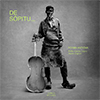

De sópitu

Canciones, Fandangos, Saltones, Xiringosas, Giraldillas y otros brincos del Norte

La Caramba

The most extroverted character of the Spanish 'tonadilla' in the 18th century.

Sancta Ovetensis

Splendor in the cathedral of Oviedo

Baset

Symphonies. Madrid, 1753

Concerto Zapico Vol. 2

Forma Antiqva plays Spanish Baroque Dance Music

The Volcano Symphony

Ernst Reijseger | FORMA ANTIQVA | Aarón Zapico

Opera Zapico

Opera music from Monteverdi to Mozart arranged as instrumentals by Aarón Zapico, Daniel Zapico and Pablo Zapico

Le Quattro Stagioni · The Four Seasons

Il Cimento dell’Armonia e dell’Inventione The Contest between Harmony and Invention

Concerto Zapico

Forma Antiqva plays Baroque Dance Music

Amore x Amore

Cantatas for alto and instrumental works by Georg Friedrich Händel

Sopra Scarlatti

Cantatas for soprano solo and continuo by Domenico Scarlatti

[out of stock]

Insólito estupor

Villancicos, saynetes, cantadas... y una batalla

Bizarro!!

Italian music of the seicento

DVD Rara Avis 1.0

Live concert DVD recording

Awards

GEMA Award (Asociación de Grupos Españoles de Música Antigua) for «Mejor Proyecto de Innovación» for «De Sópitu», 2024.
FestClásica Label Award (Asociación de Festivales Españoles de Música Clásica) to Forma Antiqva and its programme «Farándula castiza», 2021.
GEMA Award (Asociación de Grupos Españoles de Música Antigua) for «Mejor Dirección 2019» to Aarón Zapico.
Gold Medal of the European Forum Cum Laude, 2019.
MIN Independent Music Award — Best Classical Music Album 2019 for «Concerto Zapico Vol. 2».
NPR Music's Best Classical Albums Of 2018 for «Concerto Zapico Vol. 2».
GEMA Award (Asociación de Grupos Españoles de Música Antigua) for «Mejor Grupo de Música Barroca y Clasicismo 2016».
GEMA Award (Asociación de Grupos Españoles de Música Antigua) for «Mejor Producción Discográfica 2016» for «Crudo Amor - Agostino Steffani».
FestClásica Award (Asociación de Festivales Españoles de Música Clásica) to Forma Antiqva and its programme «Concerto Zapico», 2015.
International Classical Music Awards nomination for «Opera Zapico», 2014.
International Classical Music Awards nomination for «Concerto Zapico», 2012.
AMAS Music Award in Asturias, 2012.
Serondaya Award for Cultural Innovation, 2012.
Nomination for the International Classical Music Awards for «Amore x Amore», 2011.
«Asturiano del Mes» Award from the newspaper La Nueva España, 2011.
«Grupo del Año» Award from Radiotelevisión del Principado de Asturias, 2010.

Partners

NextGenerationEU
Project funded by INAEM, Ministerio de Cultura
INAEM
Plan de Recuperación, Transformación y Resiliencia

Contact

Universo Zapico
Producción
produccion@universozapico.com

c/ Ramón y Cajal, 18 - 3º Izq.
33900 Langreo, Asturias (Spain)
universozapico.com

Information

Legal information and notice
Privacy Policy
Cookie Policy
Office


  • Facebook
  • YouTube
  • Spotify
  • Instagram